When most people hear "social engineering," they think of phishing emails with broken English and suspicious links. That image is dangerously outdated. The social engineering landscape in 2026 bears almost no resemblance to the crude attacks of five years ago.
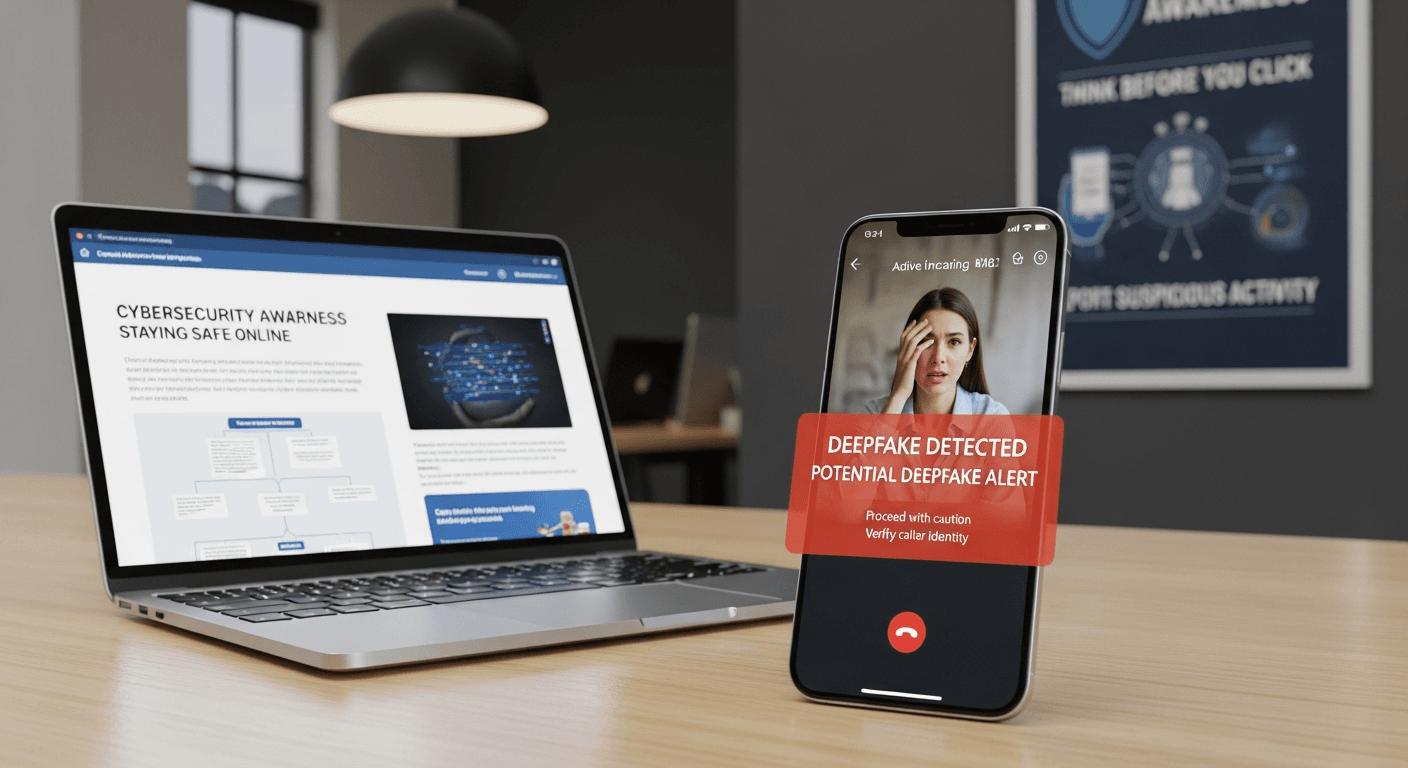
Today's social engineers use AI to craft flawless communications, deepfake technology to impersonate executives, and sophisticated pretexting that builds trust over weeks before the attack. They exploit not just email but voice calls, text messages, QR codes, social media, and even physical access. And they're devastatingly effective — social engineering is involved in 98% of cyber attacks according to recent industry data.
The New Attack Vectors
Vishing: Voice-Based Social Engineering
Vishing (voice phishing) attacks have exploded with the availability of AI voice cloning. An attacker needs only a few seconds of audio — easily obtained from YouTube videos, earnings calls, podcast appearances, or voicemail greetings — to create a convincing replica of someone's voice.
Common scenarios:
- An "employee" calls the helpdesk requesting a password reset — the voice matches the person's real voice
- A "CEO" calls the finance team to authorize an urgent wire transfer
- A "vendor" calls accounts payable to update their banking details for future payments
- A "government agent" calls a company representative demanding immediate action on a fabricated compliance issue
The sophistication is remarkable. Attackers research their targets extensively, referencing real projects, using correct internal terminology, and timing calls to coincide with known business events.
Quishing: QR Code Attacks
QR codes became ubiquitous during the pandemic, and users have been trained to scan them without suspicion. Attackers exploit this trust by:
- Placing malicious QR codes over legitimate ones in restaurants, parking meters, and shared spaces
- Sending physical mail with QR codes that appear to come from banks, utilities, or government agencies
- Emailing QR codes that bypass URL-scanning email filters (because the malicious URL is encoded in the image, not in the email text)
- Placing QR code stickers on office equipment that redirect to credential-harvesting pages
Quishing is particularly effective because it moves the interaction from a managed corporate device (where email filters and web proxies provide protection) to a personal smartphone (which typically has no corporate security controls).
Business Email Compromise 2.0
Traditional Business Email Compromise (BEC) involved spoofing or compromising an executive's email account and sending fraudulent payment requests. The 2026 version is far more sophisticated:
- Thread hijacking — Attackers compromise an email account, monitor ongoing conversations, and inject themselves at the perfect moment (e.g., sending updated wire instructions in the middle of a real transaction)
- Vendor impersonation — Compromising a vendor's email system and sending legitimate-looking invoices with updated payment details
- Long-game pretexting — Building relationships over weeks of normal-seeming email exchanges before making the fraudulent request
- Multi-channel attacks — Following up a fraudulent email with a deepfake phone call to confirm its legitimacy
BEC losses exceeded $2.9 billion in 2025 according to FBI IC3 data — more than ransomware, more than any other category of cybercrime.
Physical Social Engineering
Not all social engineering is digital. Physical attacks remain effective and are often the precursor to a digital breach:
- Tailgating — Following an authorized employee through a secured door
- Pretexting as vendors — Arriving in a uniform (IT technician, delivery driver, cleaning crew) to gain access to secure areas
- USB drops — Leaving infected USB drives in parking lots, break rooms, or lobbies
- Shoulder surfing — Observing passwords, PIN codes, or sensitive information on screens in public spaces
Building a Human Firewall
Security Awareness Training That Works
Annual compliance-checkbox training doesn't change behavior. Effective Security Awareness Training must be:
- Frequent — Monthly training touchpoints keep security top of mind
- Relevant — Training scenarios should reflect the actual threats your employees face, not generic examples
- Measured — Regular phishing simulations with tracked metrics show whether training is working
- Role-specific — Finance teams face different threats than help desk staff. Training should be tailored accordingly.
- Consequence-based — Employees who repeatedly fail simulations receive additional training, not punishment
Layer27's Security Awareness Training program includes:
- Monthly micro-training modules (5-10 minutes) covering current threats
- Simulated phishing, vishing, and quishing campaigns
- Role-specific training for high-risk positions (finance, HR, IT helpdesk, executives)
- Real-time coaching — when an employee clicks a simulated phish, they immediately learn what they missed
- Executive dashboards showing organizational risk trends
Our clients consistently achieve 90%+ reduction in phishing susceptibility within six months of program launch.
Verification Procedures
Train your team to verify before acting. Establish and enforce these procedures:
- Out-of-band verification — Any financial transaction request received via email or phone must be verified through a separate channel. If you get an email, call back on a known number. If you get a call, hang up and initiate a new call.
- Callback verification for IT requests — Help desk should call the user back on their registered phone number before performing password resets or granting access
- Dual authorization for financial transactions — No single person should be able to initiate and approve payments above a defined threshold
- Vendor change verification — Any update to vendor banking information requires verification directly with the vendor through established contacts (not the contact information in the change request)
Technical Controls
Human training is essential but insufficient on its own. Layer these technical controls:
- Advanced email security with AI-powered detection of BEC and impersonation attempts
- DMARC, DKIM, and SPF email authentication to prevent domain spoofing
- Conditional access policies that evaluate login risk based on location, device, and behavior
- Data Loss Prevention (DLP) to prevent sensitive data exfiltration even if an account is compromised
- Link and attachment sandboxing that detonates suspicious content in an isolated environment before delivery
The Executive Target
C-suite executives and their direct reports are the highest-value targets for social engineering. They have authority to approve payments, access to sensitive strategic data, and public profiles that provide extensive material for pretexting.
Yet executives are often the most resistant to security training and the most likely to receive exceptions to security policies ("the CEO doesn't want to use MFA on his personal phone").
Layer27 offers executive-specific security briefings that cover the threat landscape relevant to senior leadership, delivered in a format that respects their time while communicating the personal and organizational risk.
Your employees are your first line of defense — and your attackers know it. Layer27's Security Awareness Training program turns your team from a vulnerability into a strength. Contact us to start building your human firewall.