Privileged Access Management in 2026: Why Your Most Dangerous Users Might Be Your Own Employees
When most business leaders think about cybersecurity threats, they picture an outside attacker — a faceless hacker in another country trying to break down the digital front door. But some of the most damaging breaches in recent memory didn't start with an outsider. They started with credentials that already had the keys.
Privileged access — the kind held by IT administrators, executives, database managers, and third-party vendors — represents the highest-value target in any organization's environment. When those accounts are compromised, misused, or simply left unmanaged, the consequences can be catastrophic. According to the 2025 Verizon Data Breach Investigations Report, credential abuse remained the leading action type in confirmed breaches, involved in over 44% of incidents. And a significant portion of those credentials? They were privileged ones.
Welcome to the world of Privileged Access Management, or PAM — one of the fastest-growing priorities in enterprise and mid-market security in 2026, and one of the most misunderstood.
What Is Privileged Access Management?
Privileged Access Management is a set of cybersecurity strategies, policies, and technologies designed to control, monitor, and audit access to an organization's most sensitive systems, data, and infrastructure — specifically by accounts that have elevated permissions.
These "privileged" accounts include:
- Local and domain administrator accounts on servers, workstations, and network devices
- Service accounts used by applications and automated processes
- Database administrator accounts with read/write access to sensitive data
- Cloud infrastructure accounts with the ability to spin up or destroy resources
- Executive or super-user accounts in business applications like ERP or CRM platforms
- Third-party vendor accounts used by contractors, MSPs, or software vendors for remote access
What makes these accounts dangerous isn't that the people who hold them are malicious — most aren't. What makes them dangerous is the blast radius if something goes wrong. A compromised standard user account is bad. A compromised privileged account can mean ransomware across every server, exfiltration of your entire customer database, or a complete wipeout of your cloud environment.
Why PAM Has Become Urgent in 2026
Several converging trends have pushed Privileged Access Management from a "nice-to-have" security control to a baseline requirement for any organization that's serious about protecting its infrastructure.
1. The Attack Surface Has Exploded
The shift to hybrid cloud environments — where workloads span on-premises infrastructure, public cloud platforms, and private cloud resources — has dramatically increased the number of privileged accounts in a typical organization. A mid-sized business in 2026 might have privileged accounts spread across Microsoft Azure, AWS, a private cloud environment, dozens of SaaS platforms, on-premises servers, and the network infrastructure tying it all together.
Each of those privileged accounts is a potential entry point. According to CyberArk's 2025 Identity Security Threat Landscape Report, the average enterprise now has nearly 50 machine identities for every human identity — most of which carry some form of elevated permission and receive far less oversight than human accounts.
2. Attackers Are Specifically Hunting for Privileged Credentials
Modern threat actors — whether ransomware groups, nation-state actors, or opportunistic criminals — understand that privileged credentials are the fastest path to their objectives. Rather than trying to brute-force their way through your defenses, sophisticated attackers will compromise a standard user account first, then use that foothold to hunt for privileged credentials through techniques like credential dumping, pass-the-hash attacks, and Kerberoasting.
This lateral movement phase — moving from an initial low-privilege breach to full administrative control — is often where the real damage happens. And without proper PAM controls, that journey can take minutes.
3. Compliance Frameworks Now Require It
Regulations and frameworks that were once silent on PAM are now explicit. The updated HIPAA Security Rule, CMMC 2.0, PCI-DSS 4.0, and SOC 2 Type II criteria all include controls that directly or indirectly require privileged access management capabilities. Cyber insurance carriers are following suit — it's increasingly common to see PAM-related questions on insurance applications, with premium discounts available for organizations that can demonstrate mature controls.
4. The Insider Threat Problem Isn't Going Away
Not all privileged access abuse comes from external attackers. Disgruntled employees, careless administrators, and well-meaning staff who take shortcuts all represent real insider risk. A 2025 Ponemon Institute study found that insider threat incidents cost organizations an average of $16.2 million per incident — and that privileged users were involved in a disproportionate share of those cases.
The Core Components of a Modern PAM Program
Implementing PAM isn't a single product purchase — it's a program that combines technology, process, and governance. Here's what a mature PAM strategy looks like in 2026.
Privileged Account Discovery and Inventory
You can't protect what you don't know exists. The first step in any PAM program is conducting a comprehensive discovery of all privileged accounts across your environment — including the ones that nobody remembers setting up three years ago. This includes service accounts, shared administrator accounts, and accounts created by third-party software during installation.
This is often a humbling exercise. Most organizations discover significantly more privileged accounts than they expected — and a meaningful number that are completely unmanaged.
Just-in-Time (JIT) Access Provisioning
One of the most powerful principles in modern PAM is eliminating persistent privileged access. Rather than giving administrators an account with elevated permissions they carry around all the time, Just-in-Time access provides elevated privileges on demand, for a specific task, for a limited window of time — and then removes them automatically.
This dramatically reduces the window of exposure. If an attacker compromises a user's credentials, they can't leverage persistent admin rights that no longer exist.
Privileged Account Vaulting and Password Management
A privileged access vault stores administrative credentials in an encrypted, centrally managed repository. Passwords are rotated automatically on a schedule or after each use, and individual users never need to know the password — they simply check it out from the vault, which logs the entire transaction.
This eliminates the all-too-common practice of sharing administrator passwords in spreadsheets, sticky notes, or worse — a group Slack channel.
Session Recording and Monitoring
When a privileged user logs into a sensitive system, every action they take should be recorded. Session recording provides a complete audit trail for compliance purposes and enables security teams to review exactly what happened in the event of an incident.
Advanced PAM platforms go further, using behavioral analytics to detect anomalous activity in real time — flagging when a privileged session starts behaving in ways that don't match the user's normal patterns. This is where Layer27's Managed Detection & Response (MDR) and 24x7 SOC capabilities become critical partners to a PAM deployment: having human analysts and AI-assisted detection watching those privileged sessions means threats don't wait until the morning standup to get noticed.
Least-Privilege Enforcement
The principle of least privilege — giving users only the access they need to do their job, and nothing more — is foundational to PAM. In practice, this means regularly reviewing privilege levels across your organization, removing unnecessary admin rights from standard users, and ensuring that even IT staff operate with standard accounts for day-to-day work, escalating to privileged accounts only when required.
Third-Party and Vendor Access Controls
Third-party vendors are one of the most overlooked privileged access risks. Managed service providers, software vendors, and contractors often require privileged access to perform their work — but that access is frequently granted in ways that are overly broad, poorly monitored, and never cleaned up when the engagement ends.
A modern PAM program applies the same just-in-time, session-recorded, least-privilege controls to vendor access that it does to internal staff. This is an area where organizations using Layer27's Co-Managed IT model benefit from clearly defined access governance as part of the service relationship from day one.
Common PAM Mistakes Businesses Make
Even organizations that have invested in PAM tools often undermine their own programs. Here are the most common failure modes we see:
Treating PAM as a one-time deployment. PAM is a living program. New accounts are created constantly, environments change, and software updates introduce new service accounts. Without ongoing management and periodic access reviews, PAM controls drift out of effectiveness quickly.
Ignoring non-human identities. Service accounts, application accounts, and API keys are often the most dangerous privileged identities in an environment — and the most neglected. In cloud environments especially, machine identities can proliferate rapidly and carry powerful permissions that nobody is actively reviewing.
Scoping too narrowly. Many organizations deploy PAM for on-premises Windows servers but ignore their cloud infrastructure. In 2026, a PAM strategy that doesn't cover your AWS, Azure, or hybrid cloud environment is leaving your most dynamic attack surface unprotected. Layer27's Infrastructure Pro and Cloud Services clients often find this gap during onboarding assessments.
Not integrating PAM with identity governance. PAM and Identity Governance and Administration (IGA) are complementary disciplines. Without integrating them, you can have a perfectly managed vault for known privileged accounts while orphaned accounts and over-privileged users accumulate in your directory unchecked.
Skipping the cultural change management. Administrators often push back against PAM controls because they add friction to their workflows. Without proper training and change management, PAM deployments stall or get worked around. This is where Layer27's Security Awareness Training plays a supporting role — helping technical staff understand the why behind privileged access controls, not just the what.
PAM and Zero Trust: The Natural Partnership
If you've read about Zero Trust architecture, PAM should feel familiar — because it's one of the most concrete implementations of Zero Trust principles. The core Zero Trust mandate of "never trust, always verify" applies directly to privileged accounts: even an account that legitimately belongs to your senior network administrator shouldn't be implicitly trusted to do anything it wants, anywhere in the environment, at any time.
PAM operationalizes Zero Trust for your highest-risk identities by enforcing continuous verification, contextual access controls, and comprehensive logging — the pillars of a Zero Trust architecture applied where they matter most.
For organizations working with Layer27's Safe Start or Protect Pro programs to build out their security foundations, PAM is typically a second-phase priority after baseline endpoint protection and multi-factor authentication are established — and it's the natural next step on the Zero Trust maturity curve.
What Small and Mid-Sized Businesses Should Do Right Now
You don't have to be a Fortune 500 company to have a meaningful PAM problem — or to take meaningful action. Here's a practical roadmap for businesses of any size:
Start with discovery. Audit every administrative account in your environment. Include on-premises, cloud, SaaS platforms, and network infrastructure. You need a complete picture before you can manage it.
Eliminate shared credentials immediately. Shared administrator accounts are one of the most dangerous practices in IT. Every privileged account should be attributable to an individual. No shared logins, no "admin/admin" default credentials left in place.
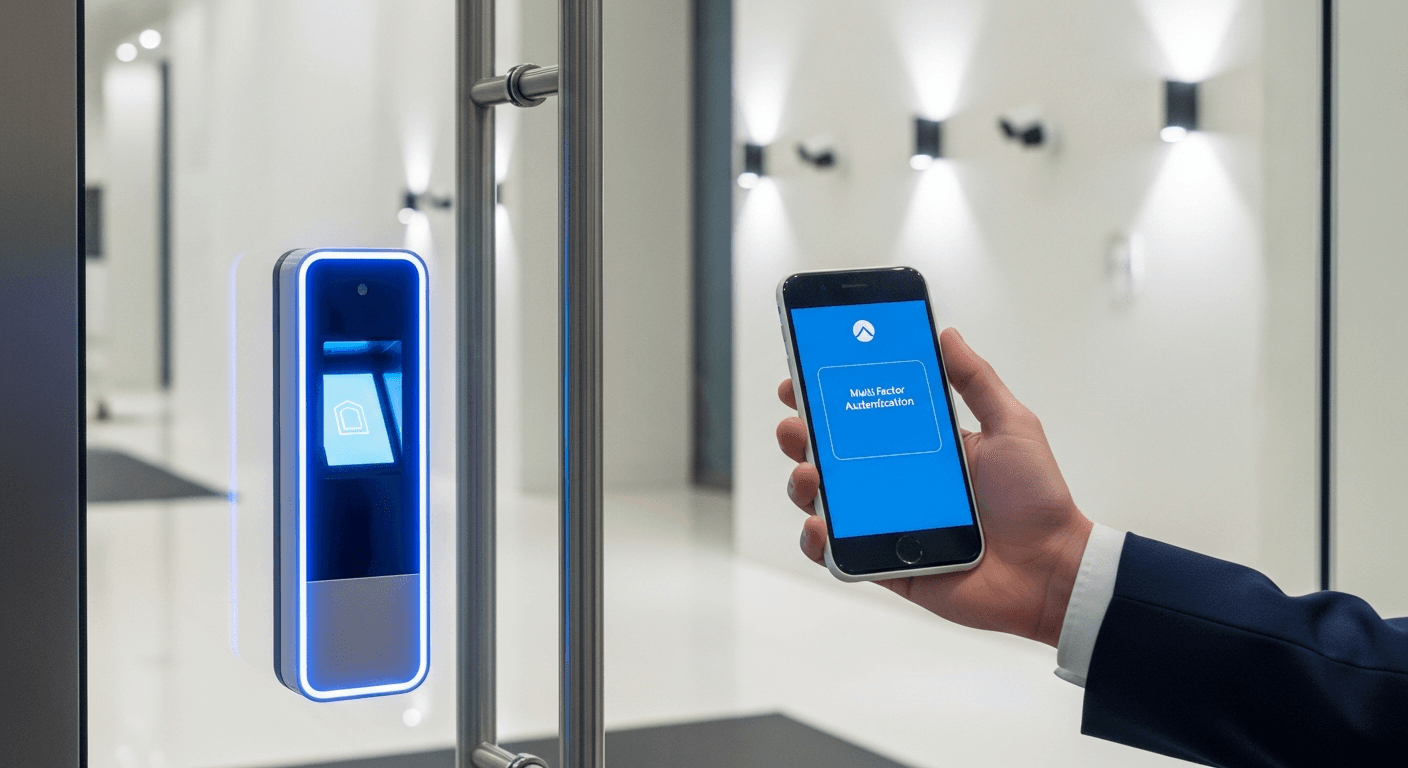
Implement MFA on every privileged account — without exception. If a privileged account can be accessed without multi-factor authentication, it is a breach waiting to happen. This is non-negotiable in 2026.
Rotate privileged passwords on a defined schedule. If you're not yet ready for a full PAM vault deployment, at minimum establish a process for regular, documented password rotation on administrative accounts.
Review and revoke unnecessary privileges. Identify users — especially IT staff and former employees — who have more access than their current role requires. Remove it. This is low-cost, high-impact risk reduction.
Audit your vendor access. Review every third-party connection with privileged access to your environment. Ensure active engagements have scoped, documented access — and that access from completed engagements has been revoked.
Plan for a PAM platform. Whether you're deploying CyberArk, BeyondTrust, Delinea, or another solution, selecting and implementing a PAM platform should be on your 2026 security roadmap. The investment is dramatically lower than the average cost of a privileged account breach.
The Bottom Line
Privileged access management isn't glamorous. It doesn't have the headline appeal of AI-powered threat detection or the urgency of a ransomware outbreak. But it is, consistently and demonstrably, one of the highest-ROI security investments an organization can make — because it directly addresses the path attackers follow once they've gained a foothold.
Your administrator accounts, service accounts, and vendor credentials are the skeleton keys to your entire IT environment. Managing them with the discipline they deserve isn't optional in 2026 — it's the baseline expectation of a mature security program, your insurance carrier, and your regulatory framework.
The good news is that you don't have to figure this out alone.
Ready to Get Your Privileged Access Under Control?
At Layer27, we help businesses across the United States assess, design, and implement identity security programs that include privileged access management — integrated with our broader Managed Detection & Response, 24x7 SOC, and Co-Managed IT services for end-to-end protection.
Whether you're starting from scratch or looking to mature an existing IAM program, our team can help you understand where your exposure is and build a practical path forward.
Contact Layer27 today to schedule a privileged access assessment →